Source Portable Dental High Pressure Sterilizer for clinics, labs, and mobile units
Explore 30 Portable Dental High Pressure Sterilizer options featuring pressure steam technology and stainless steel construction. Buyers can compare models with varying capacities, voltage requirements, and sterilization recording capabilities to find the right equipment for their facility.
Key considerations
Products List


Horizontal Pressure Steam Sterilizer for Dental Clinic Laboratory Hospital
$2790.00 - $2810.00
MOQ: 1 sets


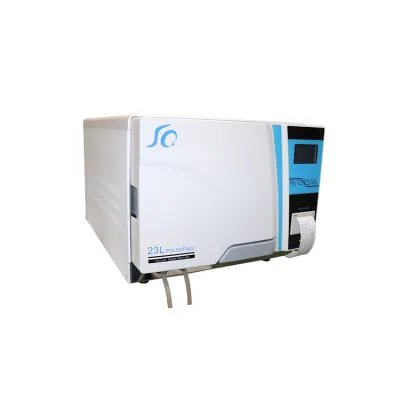


24L Portable Stainless Pressure Cooker Steam Sterilizer for Dental Lab Product
$180.00 - $194.00
MOQ: 2 Pieces


Comprehensive Sourcing Guide
Strategic Sourcing Guide for Portable Dental High Pressure Sterilizers
Understanding Core Technical Specifications and Variability
When sourcing portable dental high pressure sterilizers, buyers must first navigate a landscape defined by significant technical variability. The market offers units ranging from compact 18-liter chambers to larger 150-liter capacity systems, each designed for specific operational scales. A critical observation in the current supply pool is the divergence in power requirements and voltage compatibility. While some units operate on a standard 220V supply with a power consumption of 2kW, others are engineered for higher loads, reaching up to 9kW, which necessitates a robust electrical infrastructure. Voltage specifications further complicate procurement, with listings indicating compatibility with both 110V/220V and 60Hz/50Hz frequencies, or strictly 220V at 50Hz.
The physical dimensions and chamber volumes are equally critical for space-constrained dental clinics. Observed chamber dimensions include specific measurements such as 280mm by 295mm for smaller models, while the overall standard dimensions for certain units are listed as 410mm by 410mm by 560mm. Larger industrial-grade portable units may have a capacity of 150 liters, contrasting sharply with the 24-liter or 28-liter options found in smaller configurations. Buyers must verify that the physical footprint, including the standard dimensions of 58cm by 25cm by 60cm for specific models, aligns with their clinic's layout. The material composition is consistently noted as stainless steel, a standard requirement for durability and corrosion resistance in medical environments, though the exact grade should be confirmed during the supplier evaluation phase.
Compliance, Certification, and Regulatory Alignment
Navigating the regulatory landscape is paramount for ensuring that purchased equipment meets international safety and quality standards. The observed product data indicates a mix of certifications, with CE marking appearing frequently as a baseline requirement for European markets. Some listings also reference ISOCE certification, and a subset of high-end models claims compliance with FDA standards alongside ISOCE. It is essential for buyers to understand that the presence of a certification label on a product page does not automatically guarantee that every unit in a batch holds that specific status.
Buyers must verify the validity of certifications such as ISO13485 and ISO9001, which are often cited in the broader industry context but require specific validation for the exact model being purchased. The data shows that while some models are listed with certifications like FDA and ISOCE, others may only carry CE. This inconsistency underscores the need for direct verification with the manufacturer. Procurement teams should request current, valid certificates of conformity for the specific model number, such as AYS-280A or XFS-260, rather than relying on general category claims. The absence of a specific certification in the listing should be treated as a red flag requiring immediate clarification, as regulatory compliance is non-negotiable for medical devices.
Cost Drivers and Pricing Structure Analysis
The pricing structure for portable dental high pressure sterilizers is influenced heavily by capacity, power output, and the inclusion of advanced features. The observed price range spans from approximately $80 to $2,810, a variance that reflects the difference between basic manual units and fully automated, high-capacity systems. Several factors drive these costs. First, the power rating is a significant determinant; units with 9kW power consumption are priced significantly higher than those with 2kW ratings, reflecting the cost of heavier-duty components and transformers.
Second, the inclusion of advanced features such as LCD displays, sterilization information recording and printing capabilities, and ultra-high temperature alarms adds to the unit cost. Listings show a clear distinction between models with and without LCD displays, and between those with and without recording functions. A unit featuring a digital display and the ability to print sterilization logs will command a premium over a basic model lacking these data-logging capabilities. Additionally, the packaging method, ranging from simple carton boxes to inner plastic and outer wooden crates, impacts the final price due to the added material and logistics costs. Buyers should analyze the total cost of ownership, considering that a lower initial price may result in higher long-term costs if the unit lacks features necessary for regulatory compliance or workflow efficiency.
Operational Features and Functional Capabilities
The functional capabilities of these sterilizers vary widely, impacting their suitability for different dental practice workflows. The primary operating principle for the majority of these units is pressure steam sterilization, utilizing specific working pressures and temperatures. Observed rated working pressures include 0.142 MPa and 0.22 MPa, with corresponding rated working temperatures of 126°C and 134°C. The choice between these parameters depends on the type of instruments being sterilized and the required cycle time. Higher temperatures, such as 134°C, typically allow for faster sterilization cycles, which is beneficial for high-volume clinics.
Safety and monitoring features are critical differentiators. The presence of an ultra-high temperature alarm is a key safety feature observed in some models but absent in others. Similarly, the capability for sterilization information recording and printing is not universal; some units offer this feature for traceability, while others do not. The control interface also varies, with some models featuring a digital LCD display for precise parameter monitoring, while others may rely on analog gauges or simpler interfaces. Buyers must prioritize these features based on their specific operational needs. For instance, a clinic requiring strict audit trails should prioritize models with recording and printing capabilities, whereas a small practice might find a basic unit with a digital display sufficient.
Supplier Evaluation and Origin Verification
Evaluating suppliers requires a meticulous approach to verifying the origin and manufacturing capabilities of the equipment. The data indicates that products originate from specific regions, with Jiangxi and China cited as common origins. While these locations are hubs for medical device manufacturing, buyers must ensure that the supplier is the actual manufacturer or an authorized distributor with direct access to production lines. The availability of customization options is a positive indicator of a flexible supplier, as it suggests the ability to tailor the unit to specific clinic requirements.
When assessing a supplier, buyers should look for evidence of OEM (Original Equipment Manufacturer) capabilities, which are confirmed in several listings. This capability allows for branding and specific technical modifications. However, the presence of an OEM option does not guarantee quality; it must be paired with rigorous quality control processes. Buyers should request detailed information about the supplier's production capacity, quality assurance protocols, and after-sales support structure. The packaging standards, such as the use of wooden boxes for heavy units or standard export cartons for lighter ones, can also provide insights into the supplier's attention to detail and logistics expertise.
Quality Control and Long-Term Procurement Considerations
Ensuring long-term reliability involves a focus on quality control measures and the durability of the equipment. The use of stainless steel is a standard attribute that contributes to the longevity of the sterilizer, but the thickness and grade of the steel are critical factors that are often not detailed in standard listings. Buyers should inquire about the specific grade of stainless steel used for the chamber and exterior to ensure resistance to corrosion and wear. The gross weight of the units, ranging from 13.2kg to 320kg, provides a rough indication of the build quality, with heavier units typically implying more robust construction.
Long-term procurement considerations also include the availability of spare parts and the ease of maintenance. The complexity of the control systems, such as the presence of LCD displays and recording mechanisms, may require specialized technical support. Buyers should verify the supplier's commitment to providing technical manuals, training, and access to replacement parts. The lead time for production and delivery, while not explicitly detailed in the provided data, is a crucial factor for clinics needing immediate equipment deployment. Additionally, the minimum order quantity (MOQ) ranges from 1 to 20 units, offering flexibility for both individual clinics and larger chains. Buyers should negotiate terms that allow for scalability, ensuring that the supplier can accommodate future expansion without significant delays or cost increases.
Comparative Analysis of Model Specifications
To facilitate informed decision-making, the following table summarizes the key technical differences observed among the various models in the market. This comparison highlights the trade-offs between capacity, power, and feature sets that buyers must consider.
| Model Identifier | Capacity | Power Rating | Voltage | Working Pressure | Working Temperature | Key Features |
|---|---|---|---|---|---|---|
| AYS-280A | 18L | 2kW | 220V | 0.142 MPa | Not Specified | LCD Display, Recording/Printing |
| XFS-280B | 28L | Not Specified | 110V/220V | 0.142 MPa | Not Specified | No LCD, No Recording |
| XFS-260 | Not Specified | Not Specified | Not Specified | 0.142 MPa | 126°C | ISOCE Certified |
| RFP-280A | 150L | 9kW | Not Specified | 0.22 MPa | Not Specified | High Capacity, Heavy Duty |
| RF-ZY280AS | 24L | Not Specified | 220V 50Hz | 0.23 MPa | 134°C | FDA/ISOCE, Wooden Box |
This table illustrates that there is no single "best" model; rather, the optimal choice depends on the specific needs of the dental practice. A small clinic might prefer the compact 24L RF-ZY280AS for its high temperature and FDA certification, while a larger facility might require the 150L RFP-280A for its high capacity and power. Buyers must carefully weigh these specifications against their operational constraints and budget to make a selection that ensures both compliance and efficiency.
FAQs
What certifications are available for these sterilizers?
Available certifications include CE, ISOCE, and FDA for specific models. Buyers must verify the exact certificate for the model number, as not all units carry every listed certification.
Can I customize the sterilizer for my clinic needs?
Customization is available for these pressure steam sterilization equipment units. Suppliers offer OEM options to tailor specifications, though specific customization details require direct inquiry.
What is the price range for portable dental sterilizers?
The observed price range spans from 80 to 2810 USD. Costs vary significantly based on capacity, power rating, and features like LCD displays or recording capabilities.
Which models feature an LCD display and recording function?
Some models include an LCD display and sterilization information recording, while others lack these features. Buyers should check specific model attributes to confirm the presence of digital interfaces.
What are the typical working pressure and temperature settings?
Rated working pressures range from 0.142 MPa to 0.23 MPa, with temperatures up to 134°C. Higher temperatures allow for faster cycles suitable for high-volume clinics.
Where are these sterilizers manufactured and what is the origin?
Products originate from Jiangxi and China. Buyers should confirm the specific factory location and verify manufacturing capabilities when evaluating potential suppliers for quality assurance.